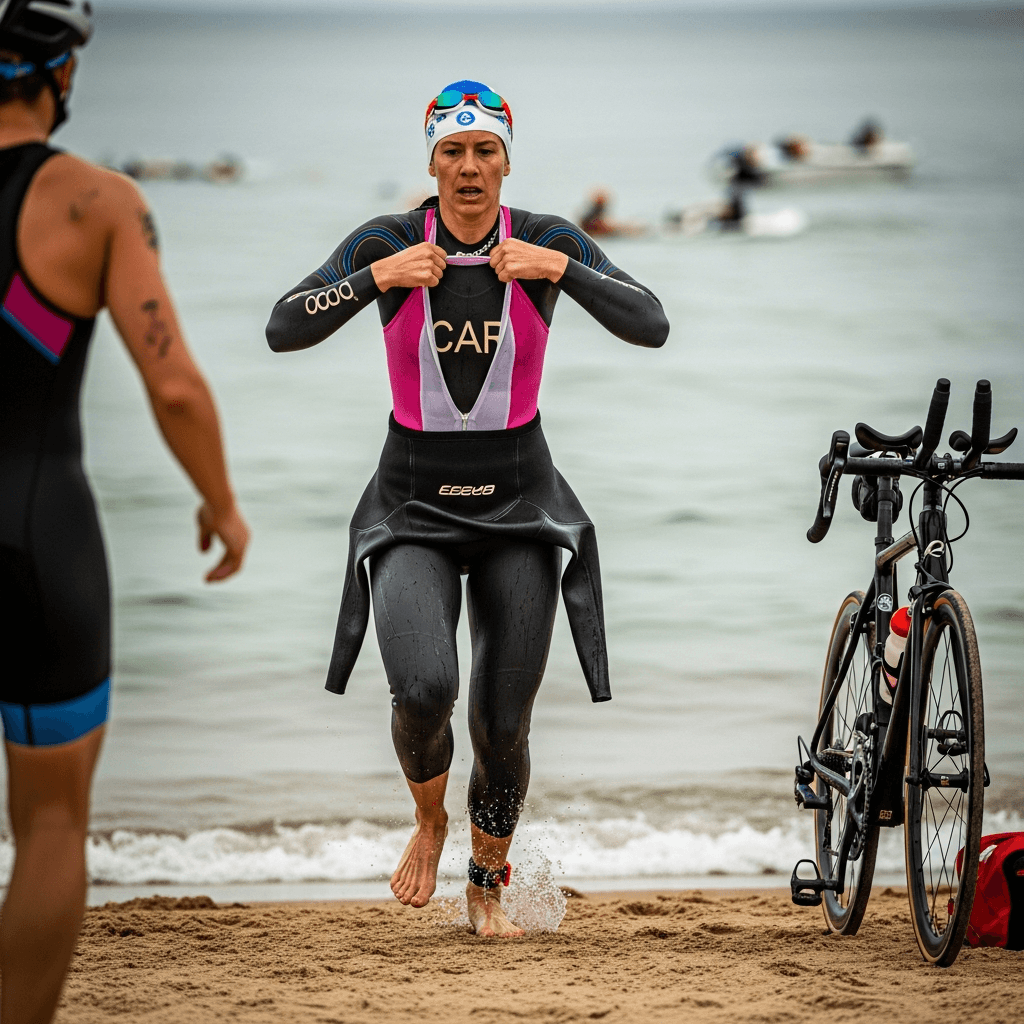
A sprint triathlon is the perfect entry point into multisport: it's short enough to finish on modest fitness, long enough to feel like a genuine achievement, and complete enough to expose every weakness in your training — all in under 90 minutes for most beginners. If you can swim 400 meters, ride a bike 20 kilometers, and run 5 kilometers separately, you can finish a sprint triathlon in 12 weeks of structured preparation.
Here's everything you need: race distances, a 12-week training plan, essential gear, transition technique, and how to handle race day.
Sprint Triathlon Distances (and How They Compare)
One source of confusion for beginners: "sprint triathlon" isn't a single standard distance. Most races cluster around similar numbers, but there's variation. Here are common race formats:
| Race Format | Swim | Bike | Run | Typical Finish Time (Beginner) |
|---|---|---|---|---|
| Super Sprint | 400m | 10km | 2.5km | 30–50 min |
| Sprint | 750m | 20km | 5km | 60–90 min |
| Olympic | 1.5km | 40km | 10km | 2–3 hours |
| Half Ironman (70.3) | 1.9km | 90km | 21.1km | 4.5–7 hours |
| Full Ironman | 3.8km | 180km | 42.2km | 9–17 hours |
Target for your first race: A standard sprint (750m / 20km / 5km). This is achievable for most people with a 10–12 week training block, assuming you can already swim, ride, and run at a basic level.
12-Week Training Plan Overview
This plan assumes you can currently: swim 200m without stopping, ride 45 minutes comfortably, and run/walk 3km. Three days per week per sport would be ideal, but realistically most beginners train 5–7 sessions per week across all three.
Weeks 1–4: Base Building
Focus: Establish consistency, build aerobic base, fix technique gaps.
| Day | Session |
|---|---|
| Monday | Swim 20–30 min (technique focus) |
| Tuesday | Run 20–30 min (easy pace) |
| Wednesday | Rest or yoga |
| Thursday | Bike 45–60 min (easy pace) |
| Friday | Swim 20–30 min (endurance) |
| Saturday | Brick: Bike 30 min + Run 10 min immediately after |
| Sunday | Rest or easy 30-min ride |
Weeks 5–8: Build Phase
Focus: Increase volume, introduce race-pace efforts, improve transitions.
| Day | Session |
|---|---|
| Monday | Swim 30–40 min with intervals |
| Tuesday | Run 30–40 min, include 2×5 min at tempo |
| Wednesday | Bike 60–75 min, moderate effort |
| Thursday | Rest or swim recovery |
| Friday | Run 30 min easy |
| Saturday | Brick: Bike 45 min + Run 20 min |
| Sunday | Rest |
Weeks 9–11: Specific Preparation
Focus: Race-distance rehearsal, transitions, race-simulation workouts.
| Day | Session |
|---|---|
| Monday | Swim 40 min — include 750m continuous effort |
| Tuesday | Run 40 min, 2×10 min at race pace |
| Wednesday | Bike 60 min — include 20km at race effort |
| Thursday | Rest or light swim |
| Friday | Open water swim practice (if available) |
| Saturday | Full race-simulation: 750m swim + 20km bike + 5km run |
| Sunday | Rest and recovery |
Week 12: Taper
Focus: Sharpen, rest, and prepare mentally. Reduce volume by 40–50%.
| Day | Session |
|---|---|
| Monday | Easy swim 20 min |
| Tuesday | Easy run 20 min, 4×30 sec strides |
| Wednesday | Easy bike 30 min |
| Thursday | Rest |
| Friday | Very short swim and easy 15-min run |
| Saturday | Race Day |
| Sunday | Rest and celebrate |
Essential Gear Checklist
You don't need premium triathlon gear for your first race. Here's what you actually need:
Swim
- Swimsuit or tri-suit — A tri-suit (one-piece suit worn for all three disciplines) is ideal; it eliminates changing time and has minimal padding for the bike
- Goggles — Tinted for outdoor/bright conditions; clear for indoor pools
- Swim cap — Usually provided by the race (wear it over your own if you use one)
- Wetsuit — Required when water temperature is below ~22°C (72°F); illegal when above ~24°C (75°F). Rental is fine for your first race
Bike
- Road bike, hybrid, or mountain bike — A road bike is fastest but any bike works for a first sprint. You do not need a tri bike with aero bars.
- Helmet — Mandatory. Must be strapped before you mount the bike.
- Cycling shoes (optional) — Running shoes on a bike are fine for a sprint. Clip-less pedals and shoes save ~1–2 minutes over 20km; not worth it if you're learning
- Sunglasses — Protection from UV and debris
- Spare tube and CO2 inflator — Carry at minimum, even on a sprint
Run
- Running shoes — Your regular running shoes are fine
- Race belt with number — Clip your race number to a belt so you can spin it to your front for the run without pinning it to your shirt
Transition Area
- Towel — Place at your spot to dry feet and mark your bike
- Race bag — For all your gear; used before and after the race
- Sunscreen — Apply before the swim
Transition Tips: T1 and T2
Transitions are the "fourth discipline" of triathlon. A slow T1 or T2 can cost you 2–5 minutes that would take significant fitness gains to recover on the course.
T1 (Swim to Bike)
- Exit the water and start removing your wetsuit immediately (if worn)
- Run to your bike rack — memorize your rack number and nearby landmarks
- Goggles and swim cap off; helmet ON and buckled before touching your bike
- Dry feet quickly if needed, slip into shoes
- Rack is on the nose of your saddle; grab bike by the seat tube, not handlebars
- Run with your bike to the mount line before getting on
Practice: Do a wetsuit removal drill at home. First time takes 3 minutes; practiced athletes do it in 30 seconds.
T2 (Bike to Run)
- Dismount before the dismount line — penalty if you ride past it
- Rack bike by the front wheel on the rack
- Helmet OFF (you can take it off after racking)
- Running shoes on; race belt clipped to front
- Go
Key rule: Helmet stays buckled from when you touch your bike until after you rack it. Violating this results in disqualification at many races.
Race Day Strategy
The Night Before
- Pack your transition bag with everything checked against your list
- Lay out your gear in the order you'll put it on
- Eat a normal dinner — not a huge pasta feast, just your regular food
- Sleep early; you'll likely have a 5–6am start
Race Morning
- Eat 2–3 hours before your start: oatmeal, toast with nut butter, banana — easy-to-digest carbs
- Arrive at least 90 minutes before your wave
- Set up transition: helmet on handlebars (strap ready), shoes under bike, number pinned to belt, nutrition in back pocket if using
The Swim
- Seed yourself conservatively — start at the back or sides if you're unsure of your ability
- Sight every 6–8 strokes: lift your eyes just above the water surface to spot buoys, then resume your stroke
- In open water, expect contact, waves, and murky visibility — this is normal
- Don't panic if your heart rate spikes at the start; breathe through it
The Bike
- First 5 minutes: easy gear, spin to recover from the swim, let your heart rate settle
- Ride at a controlled effort — most beginners go too hard on the bike and can't run well afterward
- Eat if using nutrition (gels, bars): take in the first half of the bike leg
- Avoid drafting (riding too close behind another rider) — it's a penalty in most non-draft-legal races
The Run
- The "brick feeling" — heavy, unresponsive legs at the start of the run — is universal and passes within 1–2 km
- Start slower than you think you need to; the first kilometer feels harder than it is
- Run your own race; don't chase people who start too fast in front of you
- The finish line is worth every moment of it
How FlipMP Helps Triathletes
Training for three sports simultaneously creates a data problem: your Garmin has your swim, your Strava has your bike, and your Apple Health has your run. You lose the full picture. FlipMP pulls everything into one dashboard, so you can see your training load across all three sports in one place.
The AI coach feature detects imbalances — if you're doing 5 bike sessions and 1 swim per week, it flags that your swim fitness may not keep pace with the others. Before race day, you can review your total training volume, zone distribution, and readiness score across all disciplines in minutes.